Three pillars, one machine
Ryodan MAVE is not a single product, a single IP, or a single piece of technology. It is a system. It is built around three core pillars:
- an open AR/MR hologram protocol
- an IP with a purpose
- an open-source identity layer: Maver ID
Each pillar solves a different part of the same problem. The protocol is the infrastructure. The IP gives that infrastructure meaning, narrative force, cultural gravity, and community. The identity layer connects people, rights, history, and continuity across wallets, platforms, and digital worlds.
Taken separately, each pillar can stand on its own. Taken together, they form a single machine built around one conviction: if the digital world is becoming more real every year, then the systems underneath it must become more open, more portable, more sovereign, and more human.
This is what we are building.
The digital future is not neutral
More and more of life now depends on private platforms: work, identity, access, visibility, culture. This is how cyberpunk futures really begin. Not with neon, but with gates.
That is why blockchain matters. Because it restores something normal. Decentralization is how human life already works at its best: people build, trade, create, and own without needing a private company's permission to exist. The digital world forgot that. Blockchain is how it remembers.
This is not innovation for its own sake. It is restoration.
It brings the digital world back toward a more human order: ownership instead of rented access, identity that is truly yours, free, unique, and non-transferable, as it is in real life. Not "free" in the way email is, where the real price is your data. Above all, it gives people the chance to build on ground that cannot be pulled from under them overnight, to invest in themselves and in the infrastructure their work depends on.
When those rails are truly open, they do more than protect existing work. They make entirely new kinds of work possible: new services, new professions, new forms of digital labor that do not have to begin with permission. An augmented reality experience creator building through NFTs is only one example. There will be many more.
That is why we build open-source protocols. And that is also why we build IP. Because protocols alone are not enough. Infrastructure needs culture. It needs stories, symbols, and communities able to carry the right values forward.
Not a cleaner prison. A real exit.
A new interface layer
Holograms are the next interface. Not a feature inside an app, but a layer over reality itself: objects that exist in space, that you own, that follow you across worlds.
Why it must stay open
If holograms are going to live in the world with us, they cannot be owned by a handful of platforms. The web works because anyone can publish a page without asking permission. The same must be true for holograms. You should be able to wear a hologram from a major brand, and also one made by your niece, in the same street, on the same layer, with the same rules.
Portability across worlds
We leverage a multi-asset NFT standard: ERC-5773. The goal is simple: the same hologram asset should be portable across experiences.
- AR in the real world
- 2D worlds that want to display it
- 3D worlds that want to render it
If the standard is free, other builders have a strong incentive to become compatible. They instantly unlock an ecosystem where assets already exist, created by others, without having to fund the entire content layer themselves. That lets them focus on what matters most: the world they are building, the engine, and its dynamics.
Interoperability is not marketing. It is how you win the interface shift.
Placement infrastructure
A hologram that cannot be placed is a demo. Placement needs infrastructure. We use beacons, and we use what already exists: Bluetooth, Wi-Fi, NFC. No sci-fi hardware requirement, no reinvention for the sake of it.
Your smartphone is the first beacon, then wearables, then glasses. Later, tiny chips embedded in the environment: billboards, venues, statues, streets. A distributed, open-source network that can grow without a single corporation controlling the map.

Immersion without surveillance
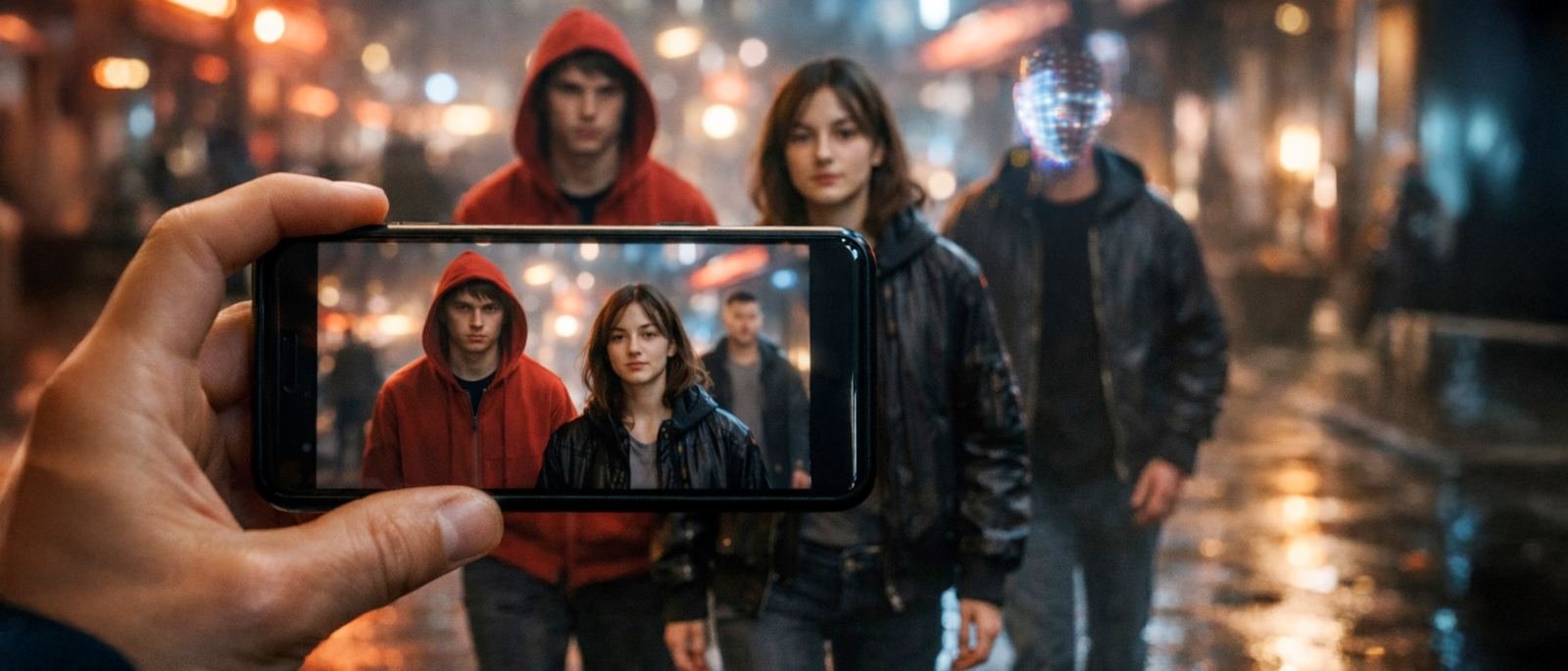
Most AR researchers quietly assume the tradeoff is inevitable: if everyone carries cameras on their face, privacy dies. We build the opposite. AR glasses are effectively a connected network of cameras. With our protocol, you can broadcast a clear rule: whether you want to be photographed or recorded, and by whom, without breaking anyone else's experience.
This does not mean people look scrambled in live vision. You can still see who is around you. Privacy applies to photos and videos. If someone outside your allowed scope records you, intentionally or not, the capture will not be ruined: the system replaces only your face with a realistic proxy, similar enough to look natural, different enough to be unrecognizable.
And we use zero-knowledge proofs to make this work without turning privacy into another tracking signal: the privacy-on rule can be verified and enforced without revealing who is broadcasting it.
Ownership without doxxing
Zero-knowledge also lets us display an asset as a hologram without revealing which NFT it is or who owns it. It can prove that a hologram is valid and allowed here without doxxing identity. So reality can be dressed with holograms without turning ownership into a tracking device.
Advertising without extraction
I am not building the IOI future from Ready Player One, a world where the streets exist only to serve ads. For us it is the opposite: advertising has a role, but it must be user-controlled, and it must be part of the economy without becoming the economy.
Billboards can be NFTs. Inside a billboard NFT, you can nest another NFT: the advertisement slot. The billboard owner gets paid. The advertiser pays for impressions. The viewer also gets paid for choosing to view ads. And at any moment, with a simple command, you can toggle ads off.
You walk into a street. You turn ads on. You watch them calmly. You turn them off. You leave with earnings. Everyone wins, without hijacking attention by force.
This is where advertising is headed anyway. The more the digital world goes onchain, the less data selling makes sense as a business model. If targeting exists, the user decides what to share, so the user deserves to earn from that targeting. And maybe one day that even gives us cleaner streets, with fewer physical billboards: when ads are off, you experience real spaces in their full glory.
When gaming becomes physical
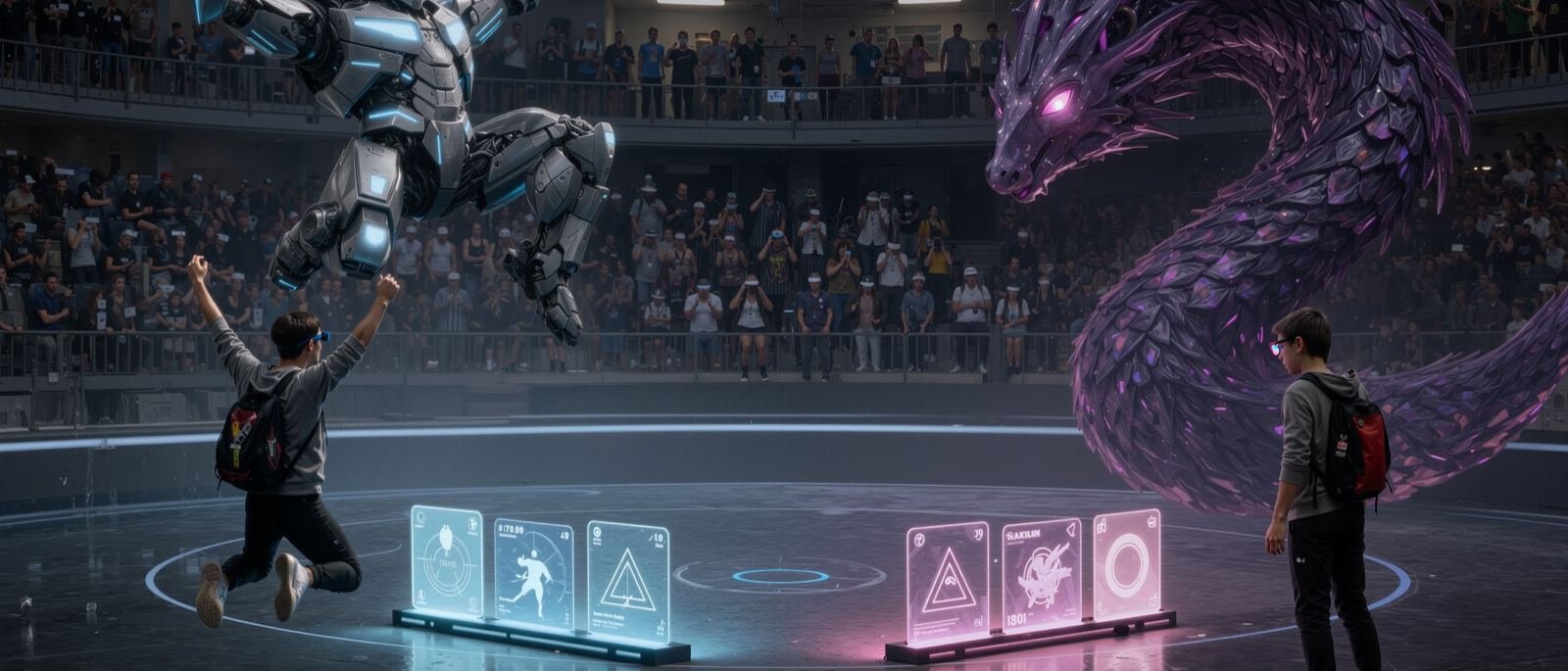
Picture an arena. Two players facing each other. They summon a monster and it appears in full scale, massive, alive, right in front of them. The audience sees the same thing. You can command it with your voice like the characters in those shows.
This is an easy example because everyone already has the mental model. With this protocol, you can build every kind of game and interactive experience on top of it. Entire new companies will be born directly on our protocol.
What holograms can be
- 3D objects that behave like objects
- digital fashion layered on the body like a game avatar
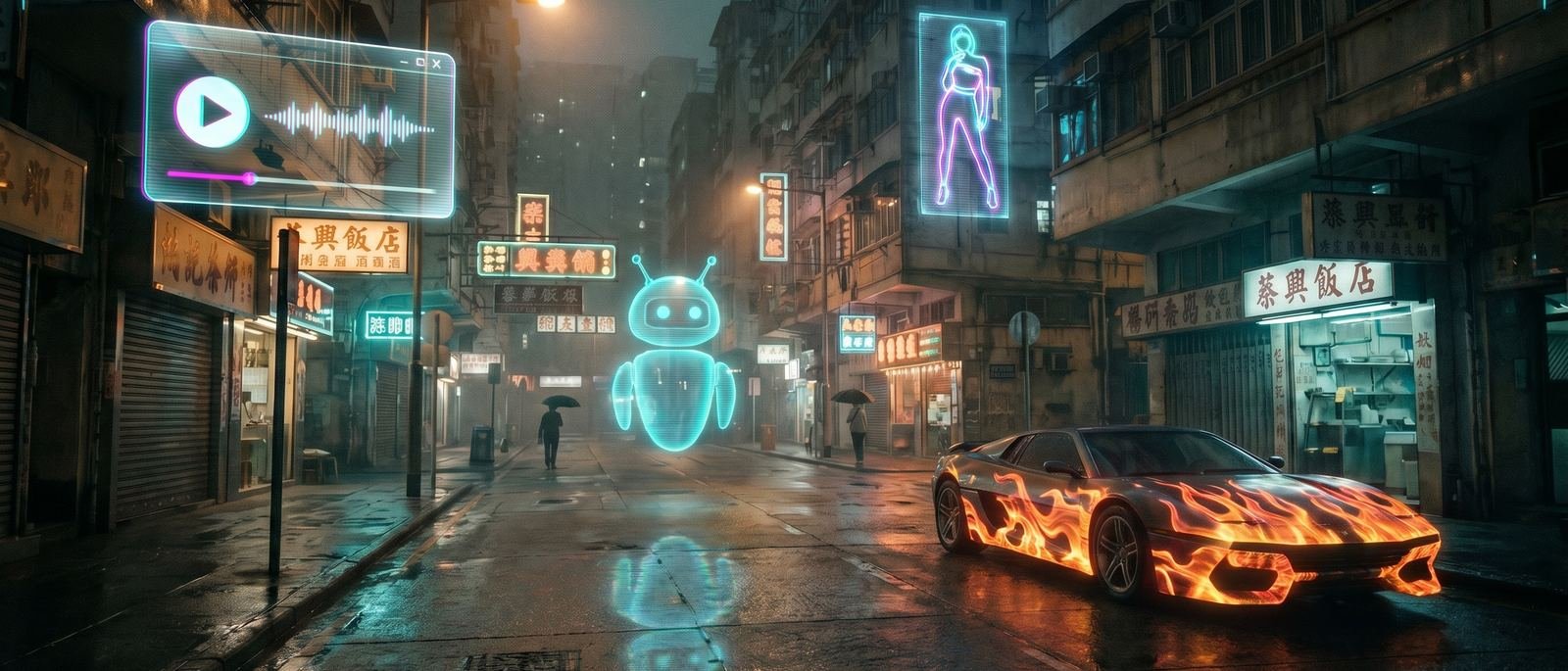
- vehicle skins: colors, decals, even 3D add-ons
- installations, interactive statues, and public art scattered across the city
- visible AI assistants connected to your wallet, able to talk, trade, or sign a deal with a handshake
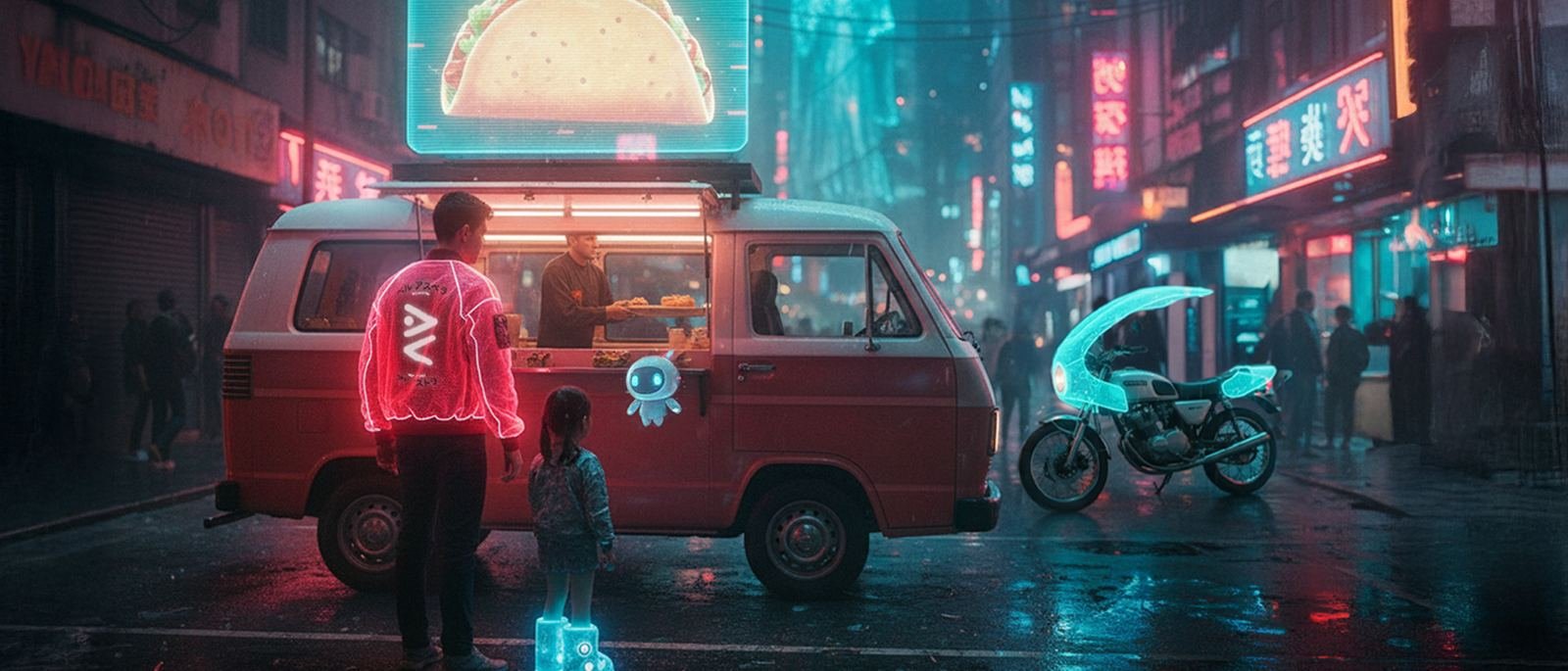
The limit is imagination. The constraint is the protocol.
We are not improvising
Before the protocol goes fully onchain, we monetize by delivering tailor-made AR/MR experiences for fashion shows, music events, sports, and gaming. I have worked across these industries. The demand is real.
The problem today is execution: interactive AR is still expensive because there are no true standards. Brands either rely on third-party apps, meaning users must already have that app installed, a friction point that scares clients away, or they start from a QR code that opens a browser-based camera experience through WebXR. That route can work, but it comes with high production costs and limited flexibility.
This is exactly why we are building a protocol layer: to reduce friction, reduce costs, and make these experiences feel native instead of just one more app, so brands of every kind can finally step in, not only the ones with massive budgets.
And when it comes to onchain, we keep it minimal and clean. We extract only for the mint, and it will be sold out or refund. No endless fundraising theatre. No vague promises.
Market context
AR/MR is not a side trend. The global augmented reality market is expected to reach $597.54B by 2030, with 39.8% CAGR from 2023 to 2030. PwC estimates AR/VR could deliver up to a $1.5T boost to the global economy by 2030 through productivity, training, and new ways of working. Broader omniverse value pools are often described as reaching up to $5T by 2030.
Those forecasts still do not properly price what we are aiming for: a permissionless object layer where holograms become standard, not platform content.
Non-negotiables
If we want a world of holograms, two properties are mandatory. Access for everyone: open source gives that. Scalability: NFT containers give that.
Without open source and NFTs, you are not building a standard. You are building a beautiful AR experience trapped in a private garden.
The point beneath the technology
This project goes in the direction blockchain was made for. A new profession is being born here. A permissionless one. A world where to work you need to be compliant, not approved. No private company should decide who is allowed to create, sell, or invest in their own digital labor.
Work that looks like the real world again: open access, no gatekeepers. And once that infrastructure exists, it enables an entire economy on top of it. People will build services, products, and even centralized companies over our open-source protocol, precisely because it lowers costs, removes friction, and stays compatible across systems. That is how standards happen.
A world with a purpose
Ryodan is the second pillar. Not just as an IP, but as a system of stories, symbols, values, and people. It is a cyberpunk anthology built as a metaphor for the state of the internet today. That is why, very often, the enemies in our stories will be Gatekeepers: figures, systems, or powers that decide who gets access, who gets to move, who gets to work, and who gets locked inside closed digital worlds.
That conflict is not there just for style. It is there because it reflects the direction the digital world is already taking.
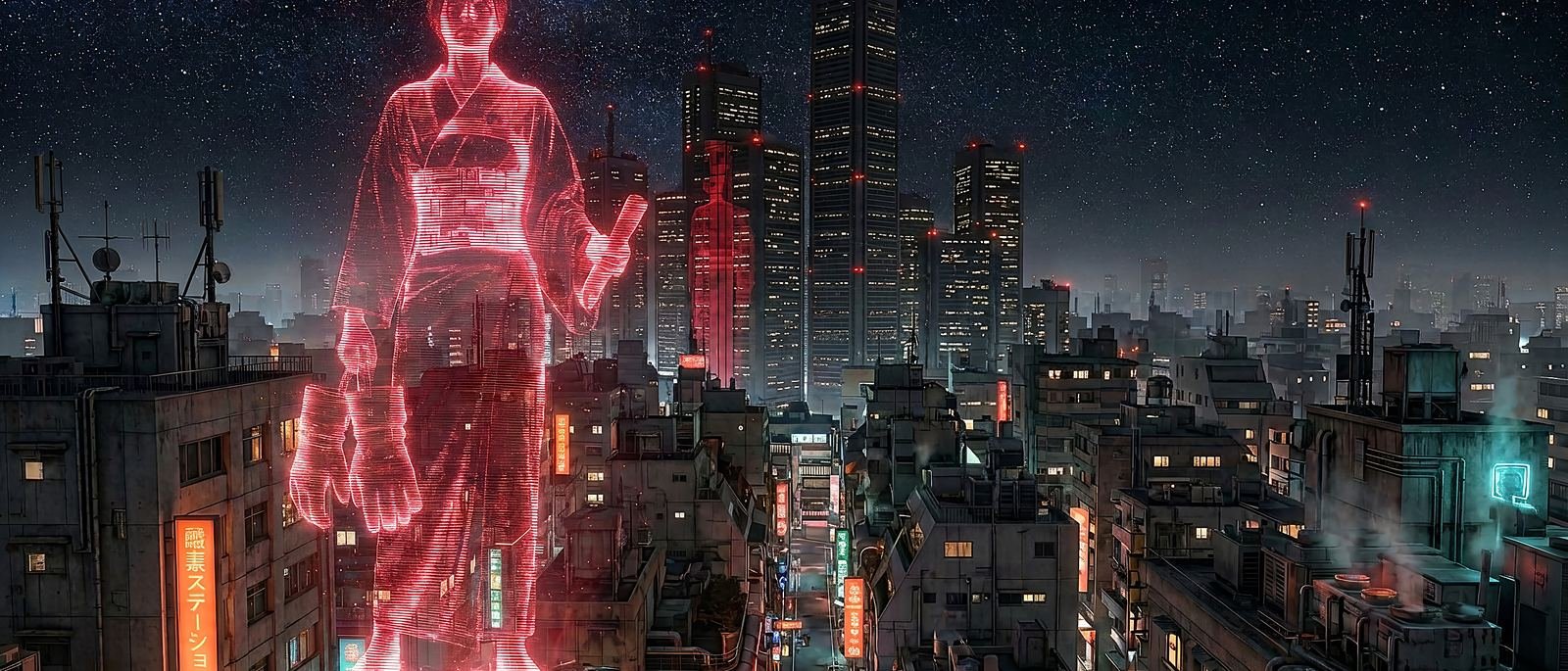
Neo-Mars, 12026
Our story begins on Neo-Mars, a cyberpunk metropolis in a distant colony, in the year 12026. That date is not sci-fi flavor: it is one of the bridges between our lore and real life. We use the Human Calendar, which counts from the dawn of civilization roughly 12,000 years ago, because it is more honest than pretending our story begins near a fake year zero. If it is 2026 here, it is 12026 in Neo-Mars. If tomorrow it is 2030 for us, it will be 12030 there too.
Our lore grows as we grow. The world evolves with us, not separately from us.
Neo-Mars began as a small mining mission on an asteroid. Then came a dock for trade. Then the first shops, the first housing blocks, the first signs that survival was slowly turning into civilization. It took a couple of centuries, but that outpost kept growing until it became the first great city-state of the solar system.
And yet, at its core, it is still an asteroid in space, where travel is hard, access is uneven, and many seek refuge in digital worlds. Not to escape life, but because those worlds are now part of life itself, with the same tensions, hierarchies, opportunities, risks, and consequences as the real one.
Why it had to be an anthology
Neo-Mars is the bridge to many digital worlds, and those worlds can be radically different from one another. One may feel like an anime-style fantasy MMO, another brutal, realistic, hyper-violent. Some may be inhabited only by users, others mostly by AIs.
Every episode can stand on its own, but every story belongs to the same system. That gives us freedom creatively, because different worlds deserve different visual languages, rhythms, and production techniques. Strategically it makes us stronger, because a real IP should never live or die by a single medium. If the core is strong enough, it travels.
It makes sense practically too, because smaller independent studios are still where experimentation is alive. And there is a financing reason: Europe already has real funding routes for audiovisual and creative work, through Creative Europe MEDIA and the wider CulturEU framework, with similar structures outside Europe. If one episode breaks out harder than the others, it pulls attention toward the whole IP.
What the stories are really about
The worlds may change, the tone may shift, the style may evolve, but the core themes remain. One of them is what it means to be human. Some inhabitants of these digital worlds may not even be aware they do not have a physical body. We might call them AI, but if they think, choose, remember, and form bonds, the real question is not what we call them, but where we draw the line, and why.
Another is the meaning of reality itself. If a digital object behaves like a real one, and if digital experiences produce consequences as real as physical ones, then maybe our definition of real is weaker than we pretend. Maybe reality is not a matter of material alone. Maybe consequence matters more.
And then there is the battle against the Gatekeepers. In a world where private companies increasingly mediate information, labor, access, visibility, identity, and even the right to exist digitally, the idea of a free and independent network stops being a nerd fantasy and starts becoming resistance.
Code is our protest. Blockchain is our weapon.
MAVE, MIA, and the Brigade
MAVE stands for Metaverse Virtual & Augmented Exploration, so the Mavers are, by definition, explorers of worlds. Inside the lore, MAVE survives only as a fragmented memory. It was the entity that first discovered these digital worlds, but no one really knows why it disappeared, or what happened to the original teams it sent inside them.
What remains is MIA, the Maver Intelligent Assistant. She used to manage missions, support the Mavers, and coordinate recruitment. Now she is a weakened remnant of that original system, but she never stopped trying to complete the mission. In secret, she keeps selecting new people and sending them a USB key called The Gatebreaker. She knows curiosity will do the rest.
During the transfer they catch only fragments, glitches, broken voice, broken signals, because she no longer has the strength she once had. But one thing comes through clearly enough: they were chosen to join a Ryodan, a brigade, to uncover what happened to the original MAVE teams and help free worlds that were never meant to become closed systems.
MIA builds one team at a time, chosen both for the world it must enter and for the chemistry between its members. Every Ryodan forms around four roles: the smart one, the muscle, the hacker, and the wild-card. What they carry matters too: in those worlds, everything they own digitally, wallets, holograms, skins, vehicles, agents, objects, can become real. Their assets are no longer cosmetic. They become tools, power, and survival.
Per aspera, ad astra. Through hardship, to the stars.
Community as structure
The Pioneers Unit is, and will remain, the core of what we call the Resistance. We call it that because we want to recover the original values of blockchain: a permissionless economy, a future where people can work, create, coordinate, own, and build digitally without asking a private company for permission. A future where infrastructure does not become feudal power.
That is why join the Brigade, join the glitch works for us. It is playful on the surface, but precise underneath. We are gathering true believers of blockchain, not in the narrow DeFi sense, but people who understand that blockchain is much bigger than speculation and much more useful than the limited stories most people still tell about it.
How a Pioneer enters
Our onboarding happens live. Together with the beacon of our community, @MrGreenity, we interview the new unit while we create their honorary PFP in real time. Before anything else, I always ask the same question: when and how did you discover blockchain, and why are you still here.
That simple question tells me a lot. About the person, about the state of crypto twitter, and about the kind of conviction that survives cycles. From there the conversation opens up naturally: technology, personal stories, art, culture, mistakes, beliefs, life. Always lightly, always with room to laugh, but never empty.
The same live link stays open, so other Pioneers can jump in later to welcome the new member. One onboarding can last an hour, or five. People come and go, the screen fills up, and what starts as an interview slowly turns into something closer to a shared table than a broadcast.
That is where some of the strongest parts of this community began: new friendships, new collaborations, people who did not know each other before starting to help each other daily. A lot of our rituals were not imposed from above. They emerged there. Even our salute was born during these moments, inspired by the shape of our logo.
Once the honorary PFP is finished, it gets translated into a black-and-white version plus one color chosen by that unit. Then I assign their unit number, and they choose a catchphrase, quote, or word that feels like them. All of that becomes a 1/1 graphic that ends up on a T-shirt we physically forge and ship. But that shirt is only the beginning.
Proof of commitment
These honoraries will be minted as soulbound tokens, not normal tradeable NFTs. The reason is simple: I do not want them to be sellable. They are the memory of a moment, something we forged together, and more than that, they are that person's identity inside the world of Neo-Mars. Identity is not something you should be able to sell or transfer.
That soulbound token gives access to their collector profile on the site. Which means that even if they never mint, or if they mint and later sell everything, they will still remain part of the Resistance. Without them none of this would have been possible.
The roles MIA identifies for each Ryodan will also become traits inside our PFPs. Through the collector profile, collectors will be able to assemble one or more teams of their own. Later on, we will open the possibility for anyone to create a profile and start accumulating points. Maybe that becomes a way to secure whitelist access, or even a place in the Pioneers Unit.
Another early door into that world is NODE. It did not start as a product. It started as a need: a place where art, identity, code, and protocol could meet, and where people who still give a damn about the future could actually speak. Issue zero honors the artists who helped shape the aesthetic of Ryodan. The next issue moves to identity, with texts written by community members.
If the future is being built, the people inside a community should not only consume the discourse. They should help write it.
Sold out or refund
We know what we want to build, what it costs to actually move, and the difference between a roadmap and a business. That is exactly why our mint will be sold out or refund.
Trust the code, don't trust the man.
You will not need to trust us: you will be able to inspect the code. We will discuss supply and price with the community, because they must move together, and because we know exactly how much capital is needed to turn the machine on. For three years I have been building that machine. What is still missing is the key. The sold out is that key.
That model is pragmatic for both kinds of people this space is made of. For true believers, it removes friction: you do not have to sit there checking the mint in real time, second-guessing other people's moves, or letting FOMO do the thinking for you. If it does not reach the threshold, you get refunded. That kind of calm is healthy, and frankly this ecosystem could use more of it.
And yes, it is pragmatic for degens too. Let's not pretend a sold out has never made anyone smile.
Your brand inside the lore
A lot of projects say holders can use their PFP commercially. We will allow that too: holders will be able to build under their own brand, use their character commercially, and, under clear rules, also use our logo with a designation such as Ryodan Official Licensed, so it is always clear to the customer that the product belongs to their brand under our official license.
But that model alone has always felt incomplete. It allows usage, yet rarely creates real structural synergy. So with our lawyers we are designing another layer.
The idea is simple, but powerful: if your brand, project, or creative identity respects our guidelines and gets approved, it can enter our lore. If you build a beer brand, our characters in Neo-Mars may actually drink your beer. If you build a game, it may become something our protagonists play. If you build a manga, a product line, a sub-brand, or another IP that fits coherently, it can begin living inside our world without being absorbed by it.
The same applies to creators. If your work is approved as part of that system, your real-world persona can become a character inside the lore: someone who runs a show, hosts a podcast, or does whatever is closest to what you already do in real life.
This is not a normal licensing relationship. It is closer to structured co-branding across fiction and reality. Some brands in our world can also exist in real life, with the same name, the same logo, and a real owner behind them. And the most powerful use of these tools is to combine them: build your own independent brand, let it exist inside our lore, then create limited editions that also use our IP and characters.
The brand remains yours. It exists inside our IP, but it does not become dependent on us.
I do not want a co-dependent system. I want a system of aligned incentives. A real win-win, where both sides gain, both sides expand, and neither needs instruments of domination over the other.

Why none of this is neutral
None of this exists just to look good. Neo-Mars, the Brigade, the anthology structure, the rituals, the licensing model, the community layer: all of it exists to take a position. To say that the future of the digital world cannot keep being shaped by gatekeepers, closed systems, and private infrastructure pretending to be neutral.
That is why the community matters so much here. Not as spectators, not as decoration, and not as something to farm for engagement, but as part of the structure itself. The Resistance is not gathered around the IP. It is one of the things that gives it force, direction, and meaning.
Identity, not account
If the protocol is the infrastructure and the IP is the world built on top of it, then identity is what keeps everything connected. The internet got one thing wrong a long time ago: it confused identity with account.
Today, most of your digital identity is not really yours. It is tied to platforms, emails, usernames, and logins you do not own. This is not identity. It is just access.
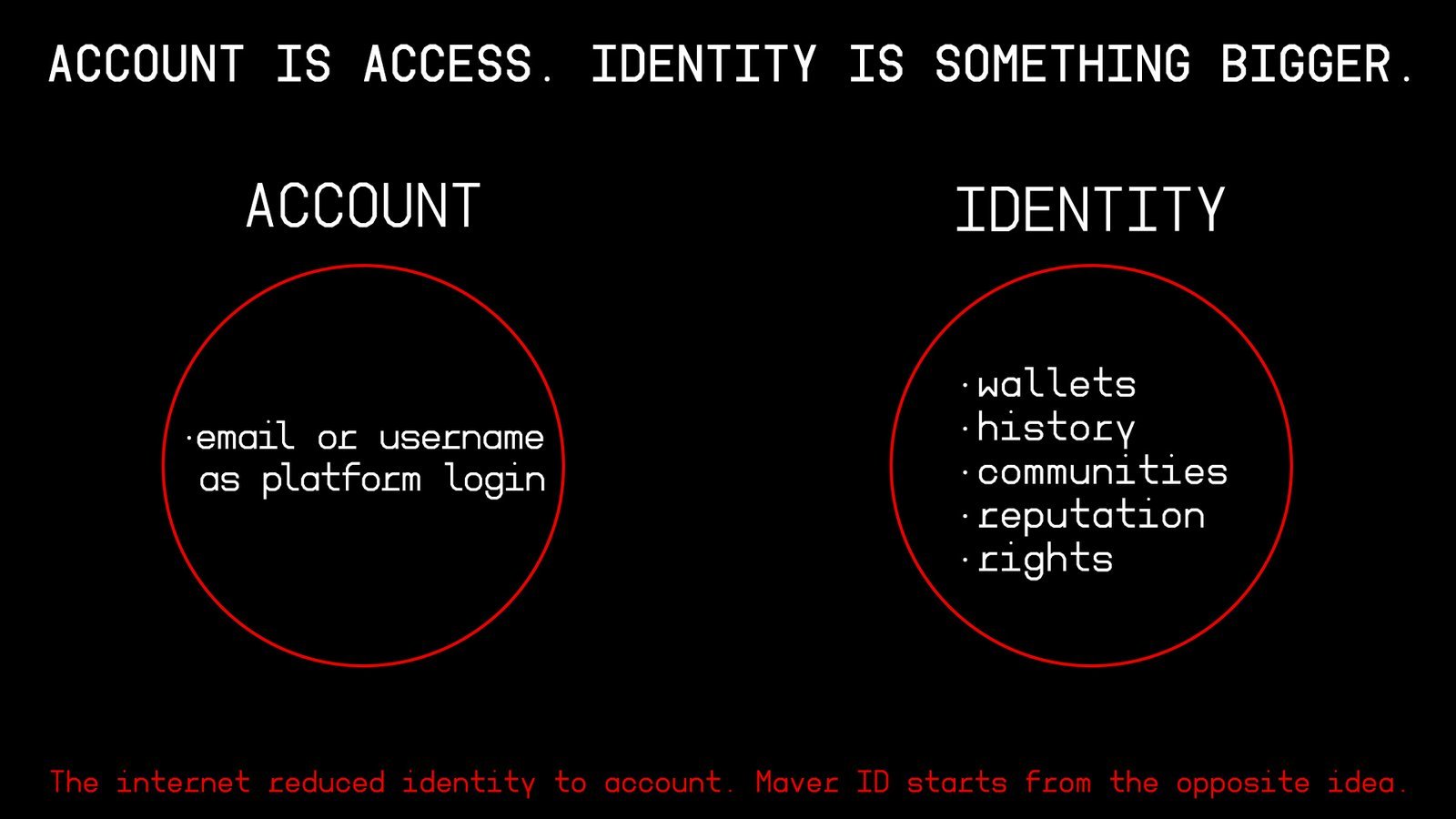
In real life, identity works differently. It is never one thing. It changes with context, but it is also the sum of many things: your actions, your history, your relationships, the communities you belong to. And through all of that, it is still yours. More than anything, it already exists. You do not buy it. You do not sell it. You do not transfer it away.
An open identity layer
Maver ID is an open-source identity protocol built to bring that same logic into the digital world. The logic is simple: one soulbound token for each wallet you own, even across different chains, all linked together by you into one identity. Not one wallet pretending to be your whole digital self, and not one account trapped inside one platform, but the sum of the wallets you actually use.
While we still live in this transition, that identity can also include the Web2 credentials you choose to attach to it. The goal, over time, is to need those less and less, until one identity can work across everything and stay yours for good.
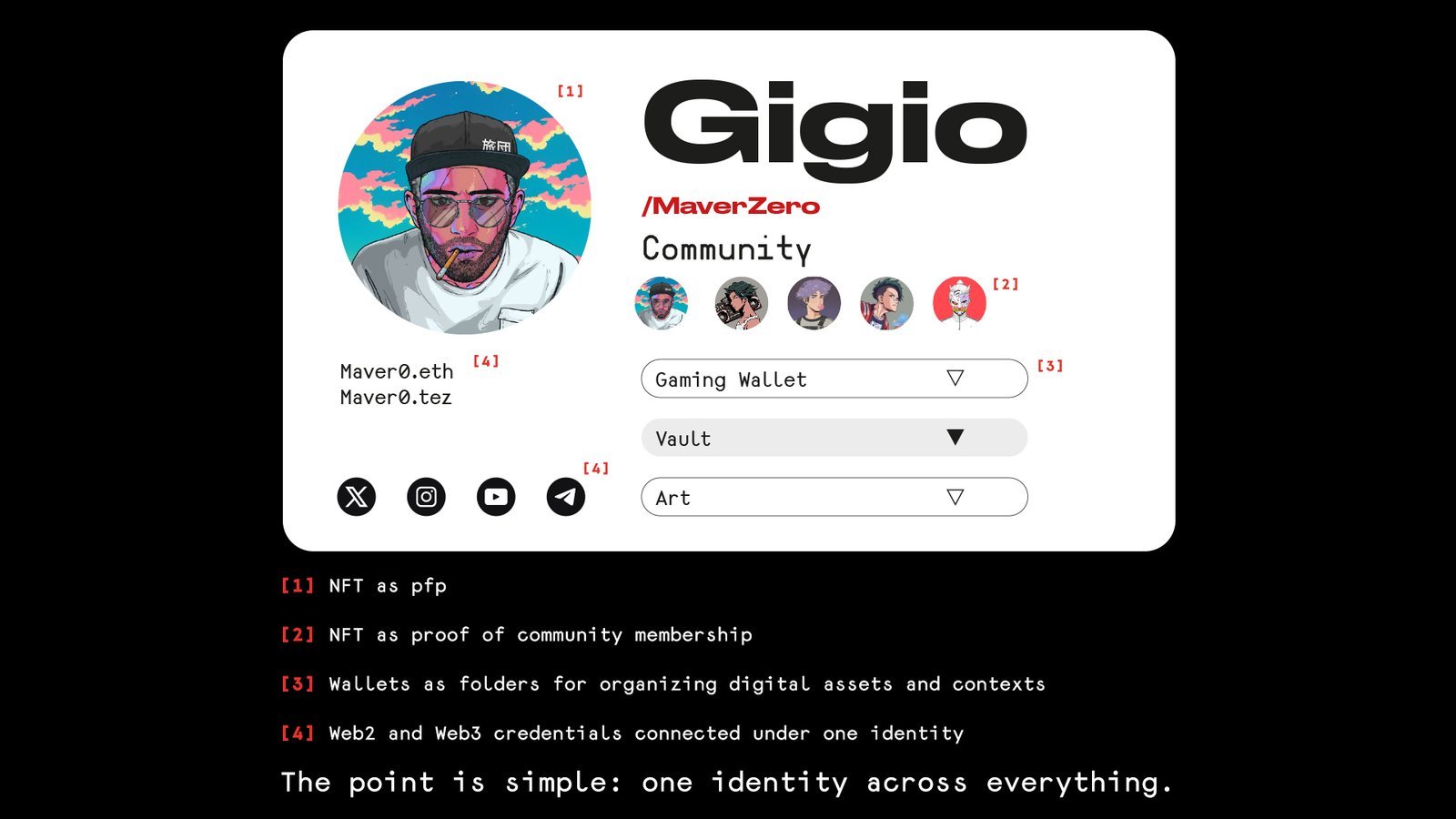
One person, many wallets
The way people actually live onchain is already fragmented. You mint from one wallet, store on another, play from another, experiment from another. And yet all of that is still you.
If you mint from a burner and later move the asset to a safer wallet, Maver ID can still understand that those wallets belong to the same person. So you do not lose the rights, benefits, or recognition you accumulated just because you moved assets to a better wallet. One of the biggest limits of digital ownership today is that your rights and your history are tied to the wrong container.
A wallet should be a tool, not a prison.
Wallets can start behaving more like folders than identities: different containers for different contexts, all tied back to the same person. And the more your identity is distributed across connected wallets, the harder it becomes to compromise it as a whole.
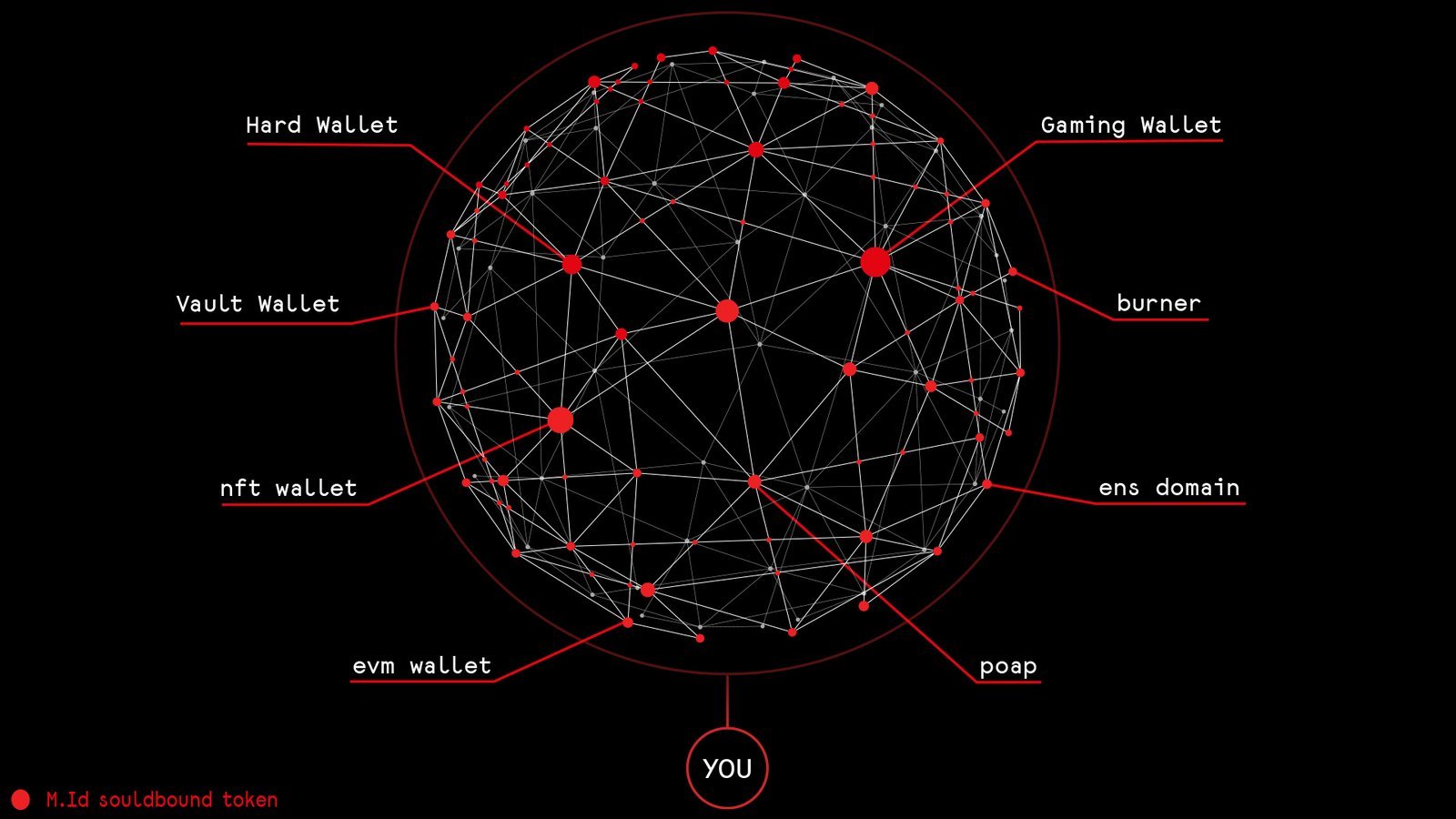
Privacy by design
Even if onchain data is public, that does not mean your whole identity should always be exposed in full. With Maver ID, identity should not mean total exposure. It should mean control: control over what you reveal, to whom, and when.
With zero-knowledge, a platform can verify that you hold a required asset, right, or credential without forcing you to reveal the wallet where it sits, or the rest of your identity. That is where privacy stops being a promise and starts becoming part of the design.
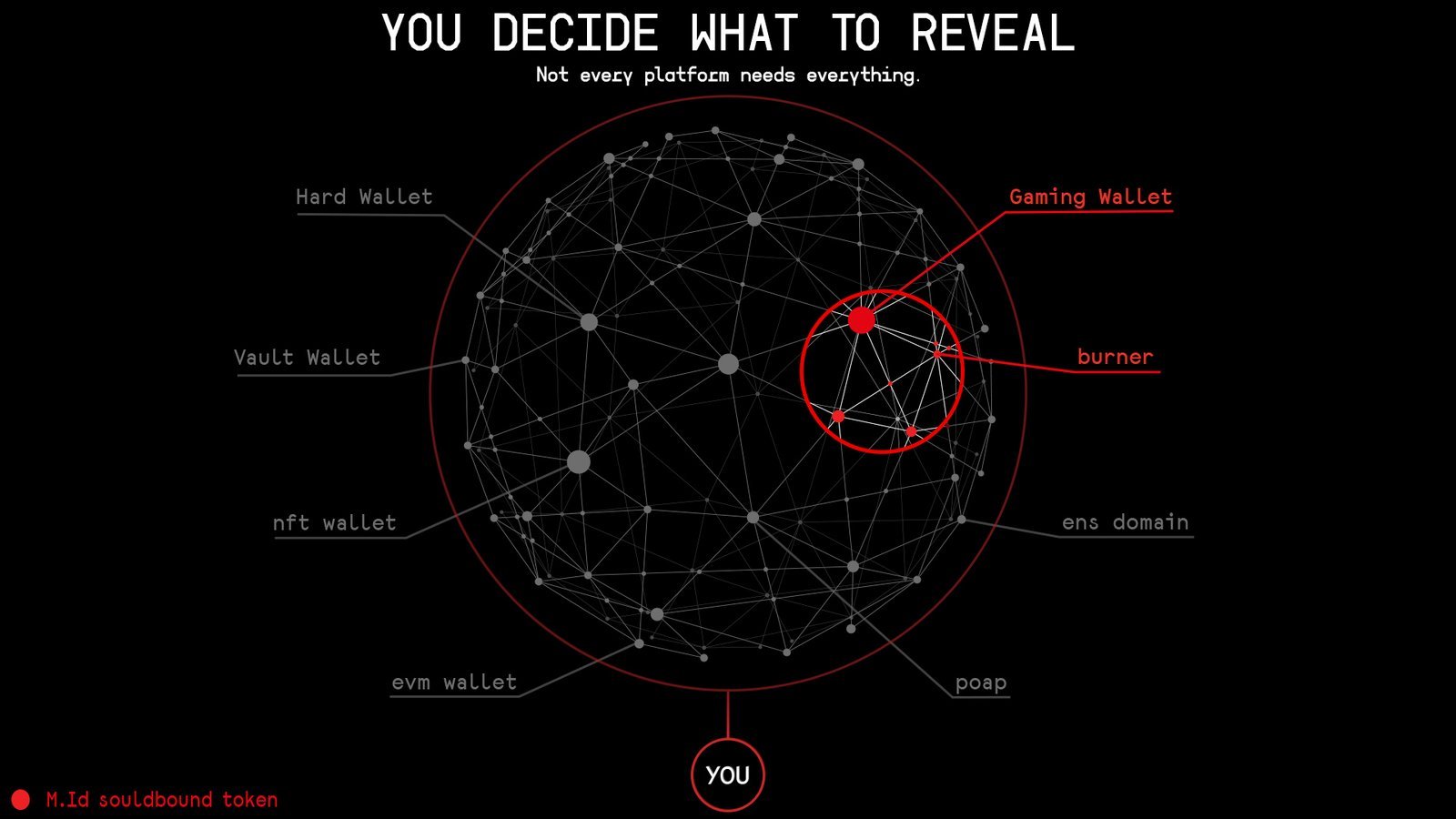
It changes security too. Compromised wallets are still one of the ugliest problems in this space, and they are not the same as a hacked Web2 account. In Web2, a hacked account is usually solved by changing a password. In Web3 a compromised wallet becomes a shared condition: you still have access, but so does the attacker. This is exactly why Maver ID includes the ability to flag compromised wallets inside the identity structure.
A first brick
We are not claiming to have built the final identity system of the future. Maver ID is a first brick. Not a finished monument, but the beginning of something other people should be able to use, expand, and build on top of. If this works, it should not stop with us.
We also want to bring this to Web2 companies with something real, not theoretical: a protocol that is already functional, understandable, and easy to install. It is open-source and free, but implementation still matters, and who better than the people who designed it to adapt it to real needs.
How the three pillars reinforce each other
The protocol, the IP, and the identity layer are not adjacent ideas. They are parts of the same machine.
The protocol makes digital objects placeable, ownable, interoperable, and usable across real space and digital environments. The IP gives those systems narrative force, symbolic power, emotional meaning, and cultural cohesion: a world people can care about, a language people can share, and a reason for the community to exist as more than an audience. Maver ID connects the person across that system, preserving continuity across wallets, contexts, rights, and histories.
Together, these three pillars describe a model of digital life more coherent than the one we have now:
- open infrastructure instead of closed platforms
- portable assets instead of trapped content
- identity instead of account dependency
- community as structure, not decoration
- IP as a living system, not just entertainment
- technology in service of sovereignty, not extraction
That is why this project was never meant to be just a collection, just a protocol, or just a story. It is a blueprint for a world where infrastructure, identity, culture, and economic participation reinforce each other instead of being owned by separate gatekeepers.
Luigi Romano, aka Gigio, aka MaverZero
Ex programmer. Graphic designer. Art director. Entrepreneur. Father. Half French, half Italian. Born in 1982.
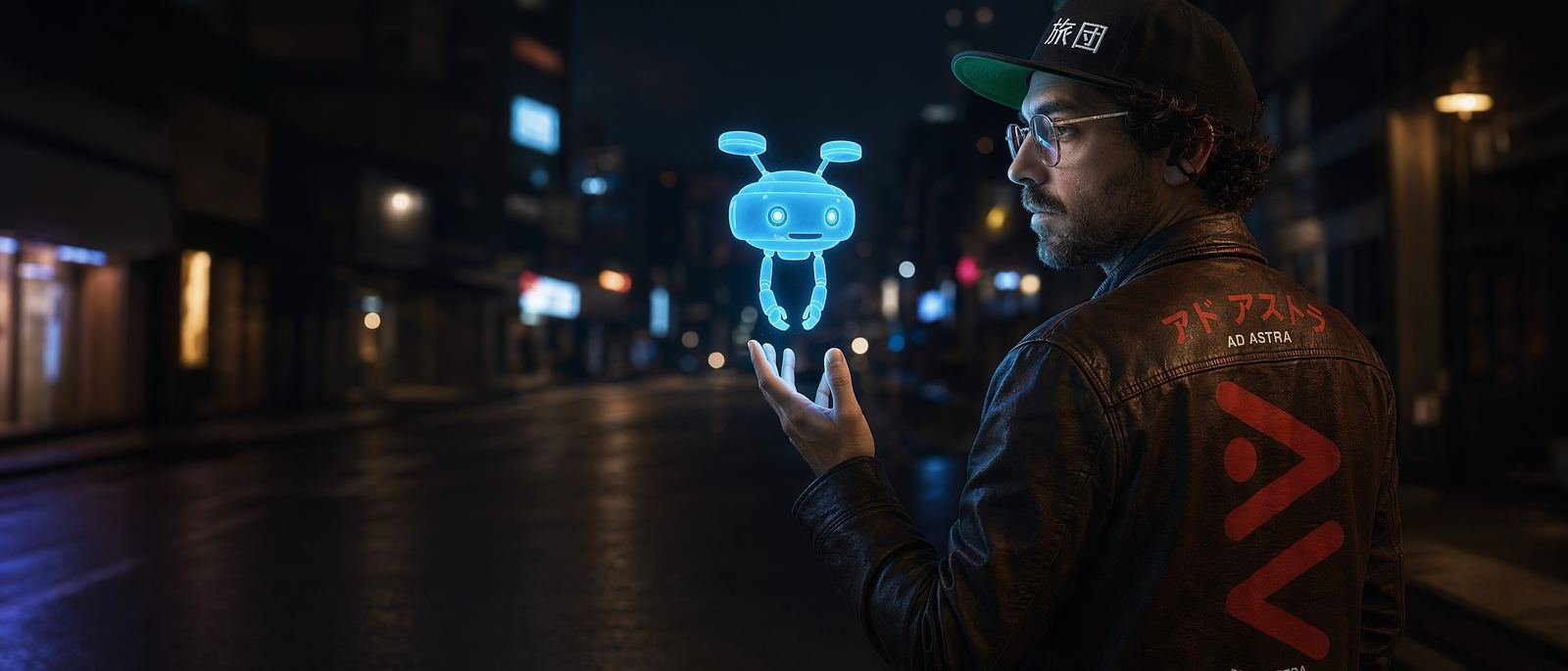
I started in computer science, then studied computer engineering, before switching to design and communication at Politecnico di Milano. I left university early because I was already working: design jobs across Milan, a streetwear brand, and a shop with my sisters selling streetwear and art, built from a small bank loan, then shut down before the crisis could hurt us.
Later I partnered with my friend and photographer Marco Ferrai to open That's All Studio, still running today, focused on branding and art direction. I never stopped being a nerd: comics, manga, sci-fi, and I became a collector of street art.
This project is the synthesis of everything I am: code, art, IP, and the need to see future tech become real.
I have spent years dreaming about holograms. Now we know how to build them. And we will do it open source.
Questions, partnerships, or integrations: info@projectmave.io