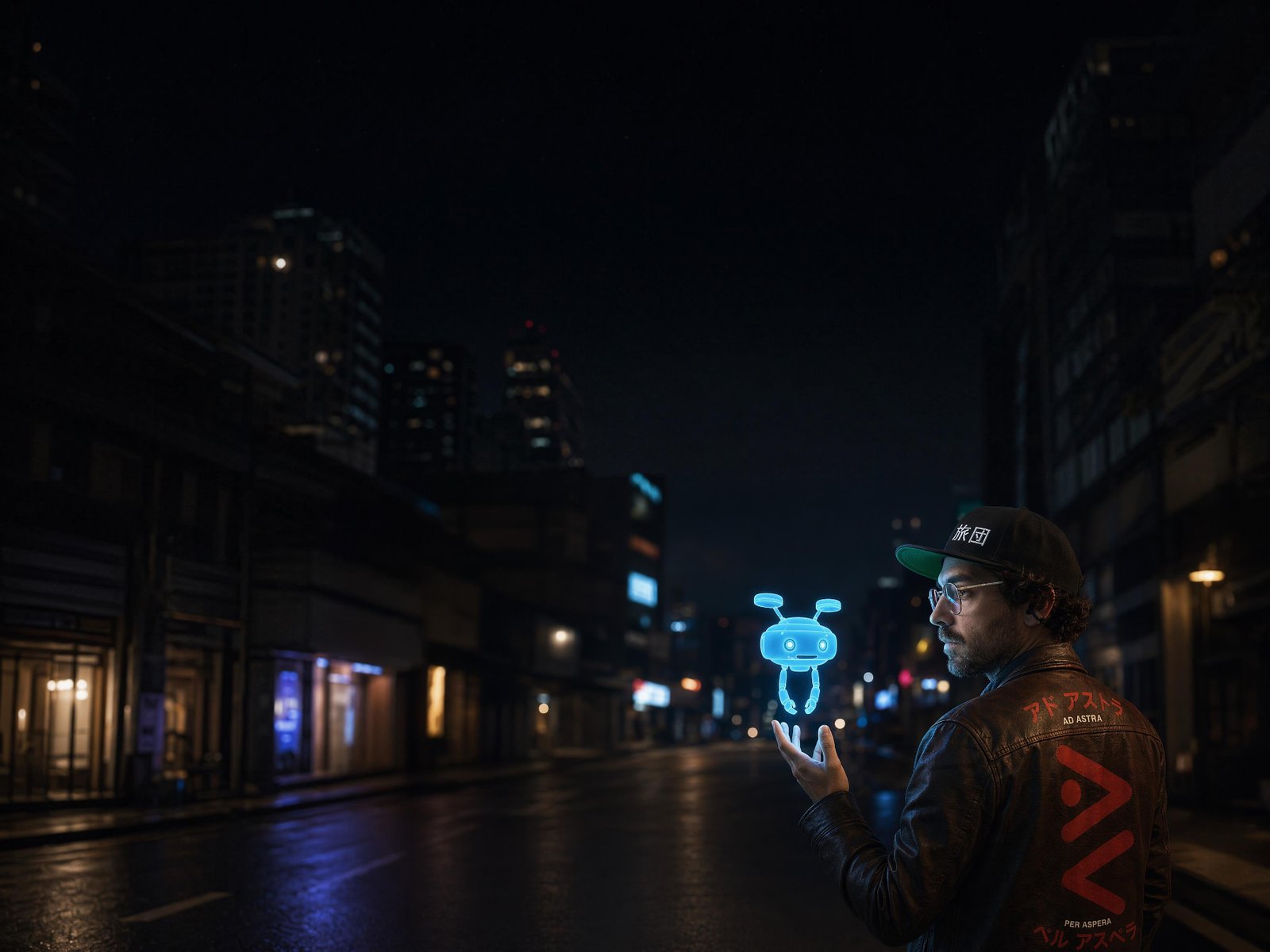
Pillar I · Protocol
A new interface layer
Holograms will not appear in the air like a movie trick. They will be seen through AR interfaces.
The shift is not a new app. It is a new interface layer over reality.

We dress the world
Most AR/MR software today is built around a familiar idea: HUD overlays, navigation arrows, maps, widgets, single apps floating in front of you.
That is not what we are building.
We dress the real world. Our protocol is designed to become the first layer you look through: the world, augmented as a coherent spatial canvas. On top of that layer, any OS can still run its own UI, menus, controls, and apps.
This matters for one reason: we do not depend on anyone's OS.
We do not need permission, partnerships, or a platform blessing to exist.
Compatibility is not a constraint. It is the baseline.
One coherent spatial canvas

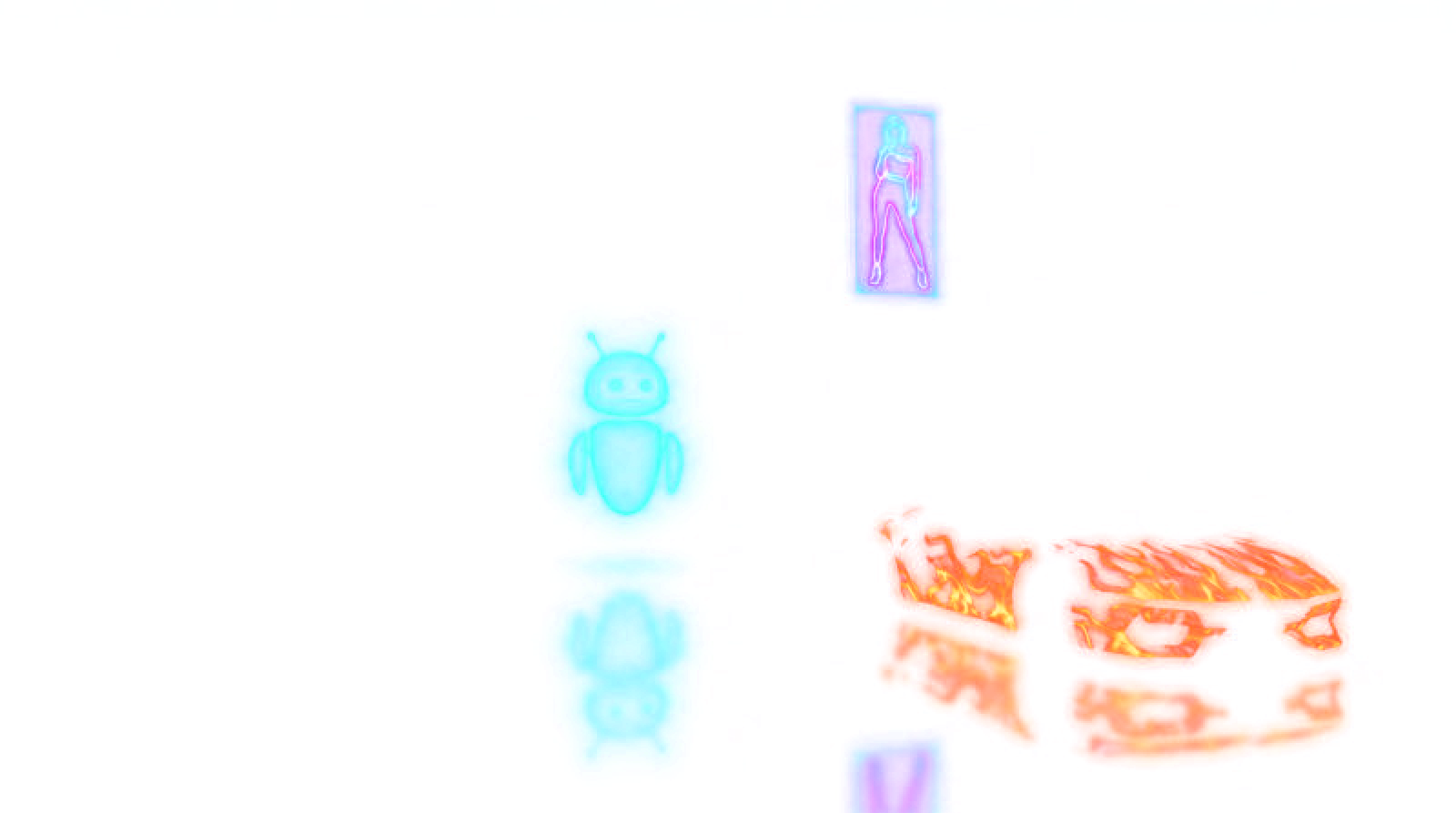
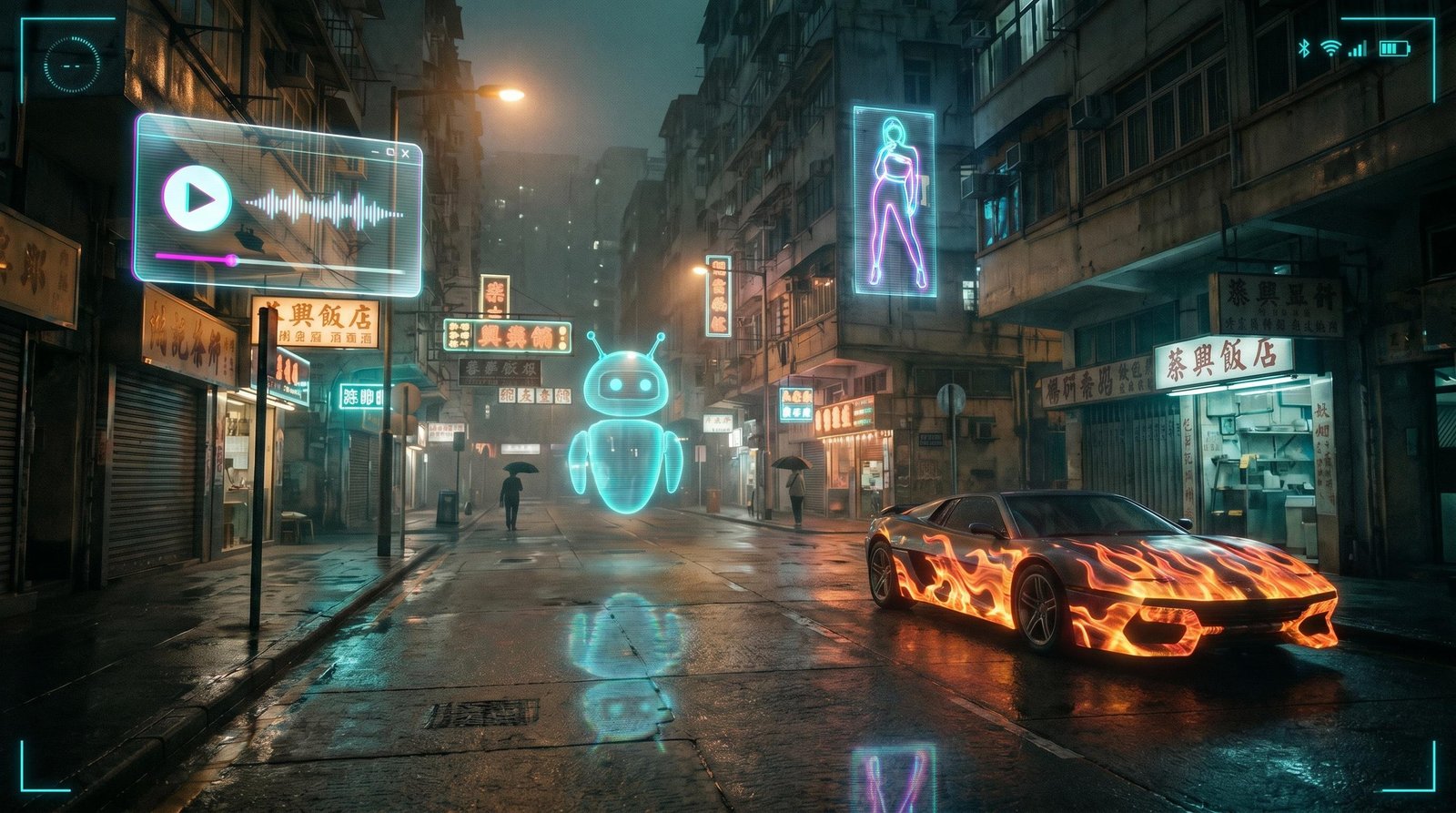
the real world
mave ar layer · ours, open
ar os
app
The layer, in daily life
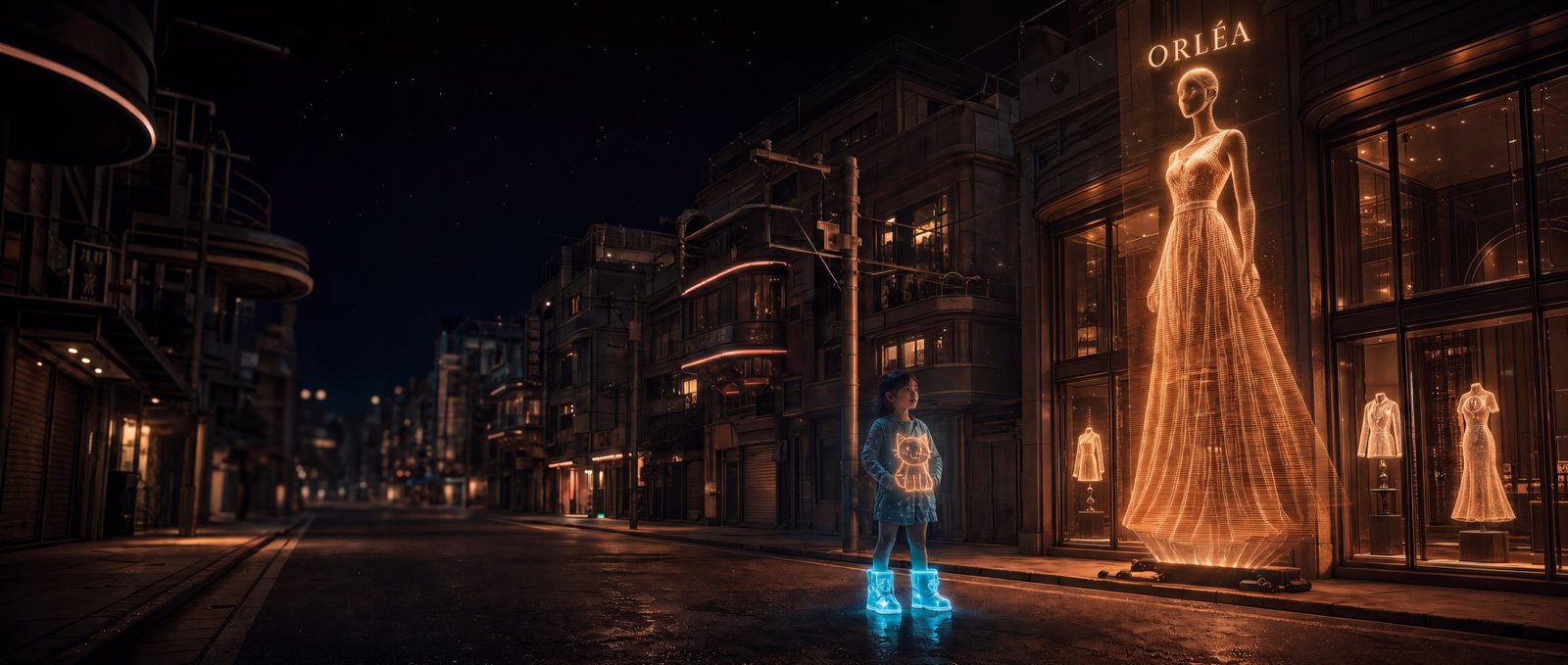
A hologram can be a billboard, a boot, a bike.
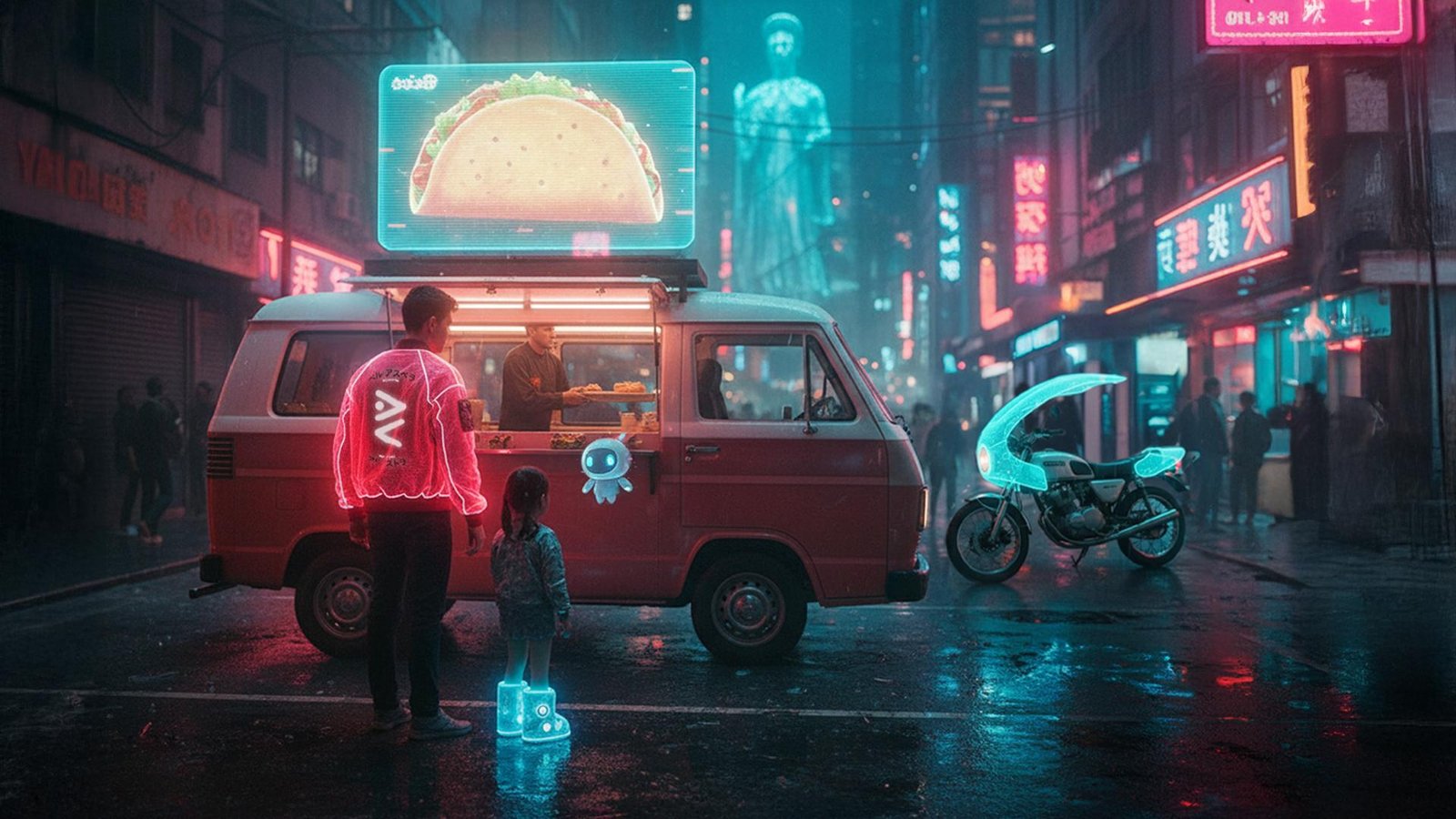 01 ar billboard
02 wearables
03 vehicle skin
01 ar billboard
02 wearables
03 vehicle skin
Why it must stay open
If holograms are going to live in the world with us, they cannot be owned by a handful of platforms.
Open source means:
anyone can create
anyone can see
anyone can interact
anyone can build on top, without asking permission
IRL you can wear a luxury brand T-shirt, but you can also wear the T-shirt your niece made at school. The same must be true for holograms.
No gatekeepers. No paywalls.
NFTs as digital containers
NFTs are not just JPEGs. NFTs are digital containers. That is exactly what holograms need.
An NFT gives a digital thing the same basic properties as any object IRL, starting with the most important one: it is unique. You can use it, gift it, sell it, or destroy it.
The NFT container makes its content as real as an IRL object, with the only missing property being physical tangibility, at least for now.
That is scalability.
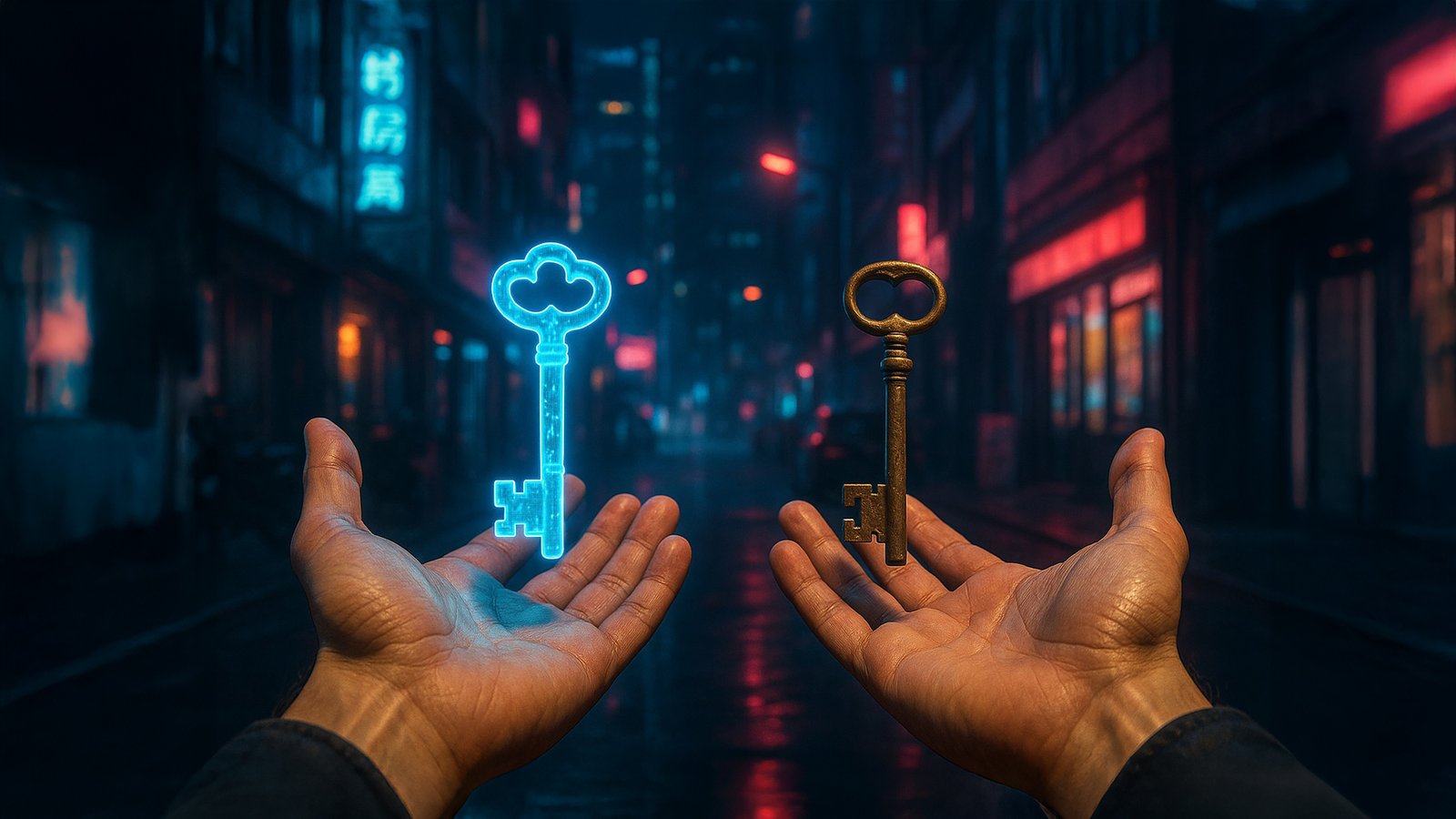
Portability across worlds
 the NFT · JPG metadata, every marketplace01
the same asset in 2D games02
in 3D games03
in VR & MR worlds04
the NFT · JPG metadata, every marketplace01
the same asset in 2D games02
in 3D games03
in VR & MR worlds04
We leverage a multi-asset NFT standard: ERC-5773. The same hologram asset should be portable across experiences:
AR in the real world
2D worlds that want to display it
3D worlds that want to render it
If the standard is free, other builders have a strong incentive to become compatible: they instantly unlock an ecosystem where assets already exist.
Interoperability is not marketing. It is how you win the interface shift.
Placement infrastructure
A hologram that cannot be placed is a demo. Placement needs infrastructure.
We use beacons, and we use what already exists: Bluetooth (BLE), Wi-Fi, NFC.
No sci-fi hardware requirement. No reinvention for the sake of it.
Your smartphone is the first beacon, then wearables, then glasses. Later, tiny chips embedded in the environment: billboards, venues, statues, streets.
A distributed, open-source network that can grow without a single corporation controlling the map.
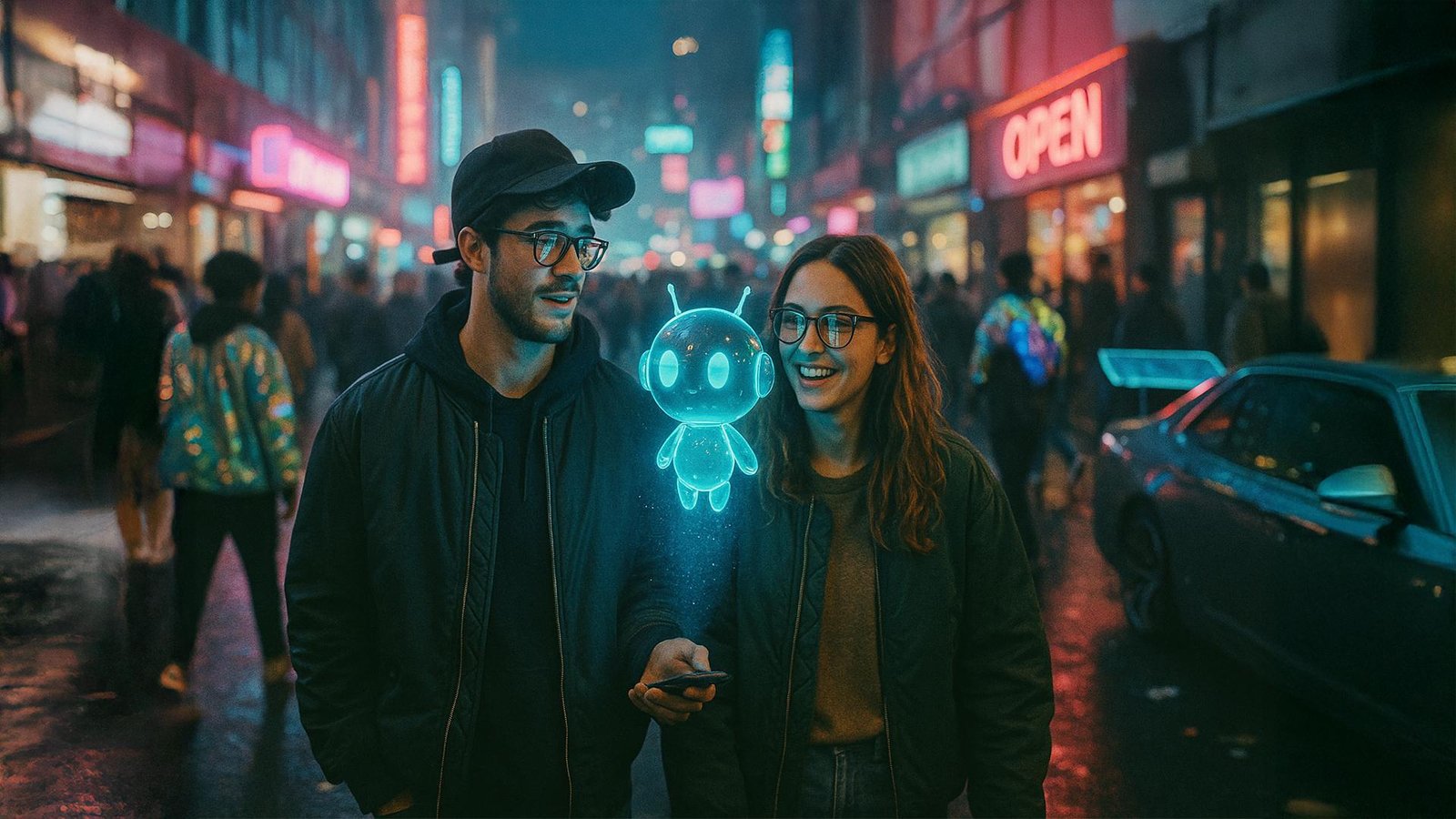
Immersion without surveillance
Most AR researchers quietly assume the tradeoff is inevitable: if everyone carries cameras on their face, privacy dies. We build the opposite.
With our protocol, you can broadcast a clear rule: whether you want to be photographed or recorded, and by whom, without breaking anyone else's experience. If someone outside your allowed scope records you, the system replaces only your face with a realistic proxy: similar enough to look natural, different enough to be unrecognizable.
And we use zero-knowledge proofs so the privacy-on rule can be verified and enforced without revealing who is broadcasting it. ZK also lets us display an asset as a hologram without revealing which NFT it is or who owns it.
Reality can be dressed with holograms without turning ownership into a tracking device.
Advertising without extraction
I am not building the IOI future from Ready Player One. A world where the streets exist only to serve ads.
Billboards can be NFTs. Inside a billboard NFT, you can nest another NFT: the advertisement slot.
The billboard owner gets paid. The advertiser pays for impressions. The viewer also gets paid for choosing to view ads.
And at any moment, with a simple command, you can toggle ads off.
You walk into a street. You turn ads on. You watch them calmly. You turn them off. You leave with earnings.
Everyone wins, without hijacking attention by force.
You already have the mental model. With this protocol, you can build every kind of game and interactive experience on top of it. Entire new companies will be born directly on our protocol. The limit is still imagination.
Non-negotiables
Access for everyone.Open source gives that.
Scalability.NFT containers give that.
Without open source and NFTs, you are not building a standard.
You are building a beautiful AR experience trapped in a private garden.
AR market projection: $597B by 2030, and it still does not price a permissionless object layer.